
AMBER IS BACK!
CHAMPA IS ONLY AVAILABLE in the wooden containers for now.
Free satin pouch when you purchase 2 or more tiny brass fragrances, while supplies last!
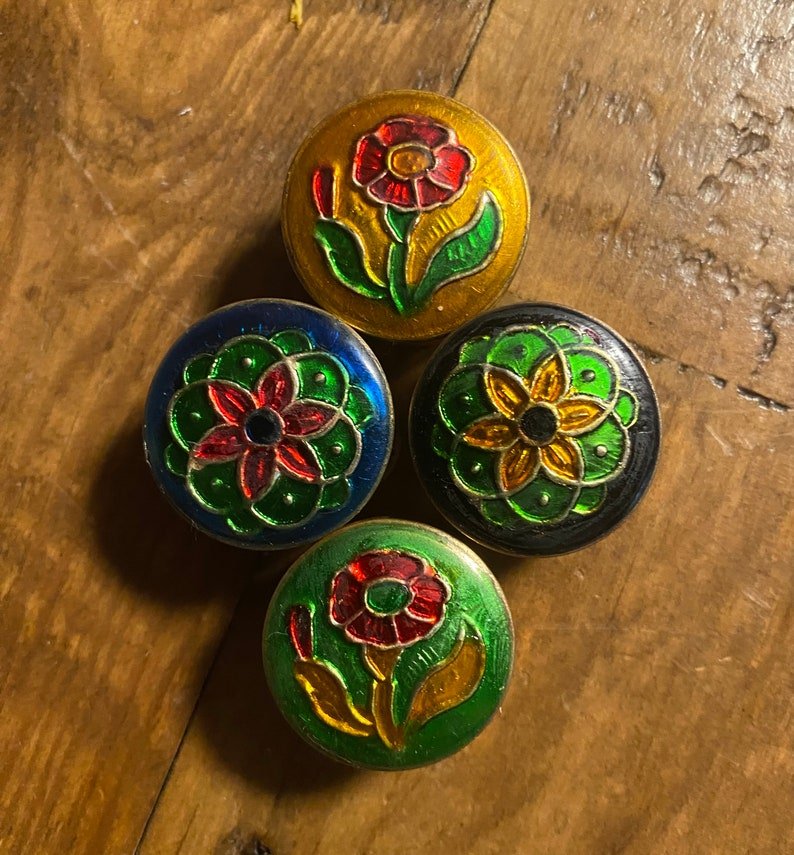
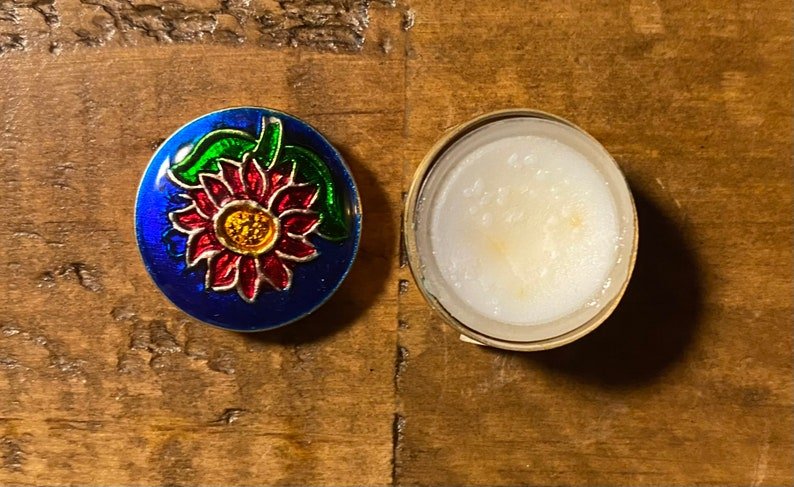
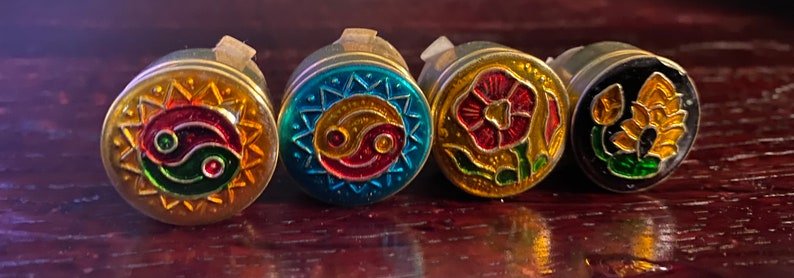
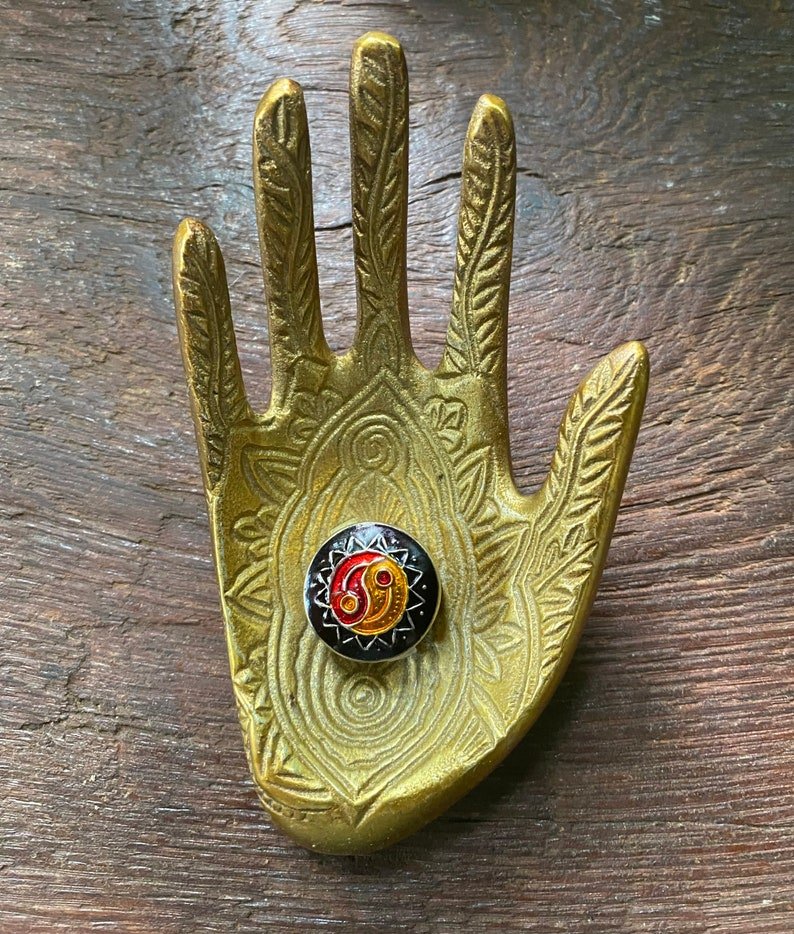
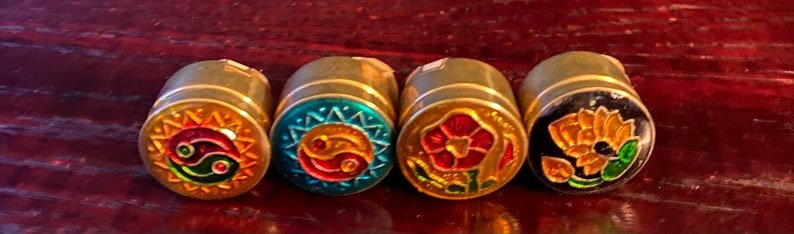
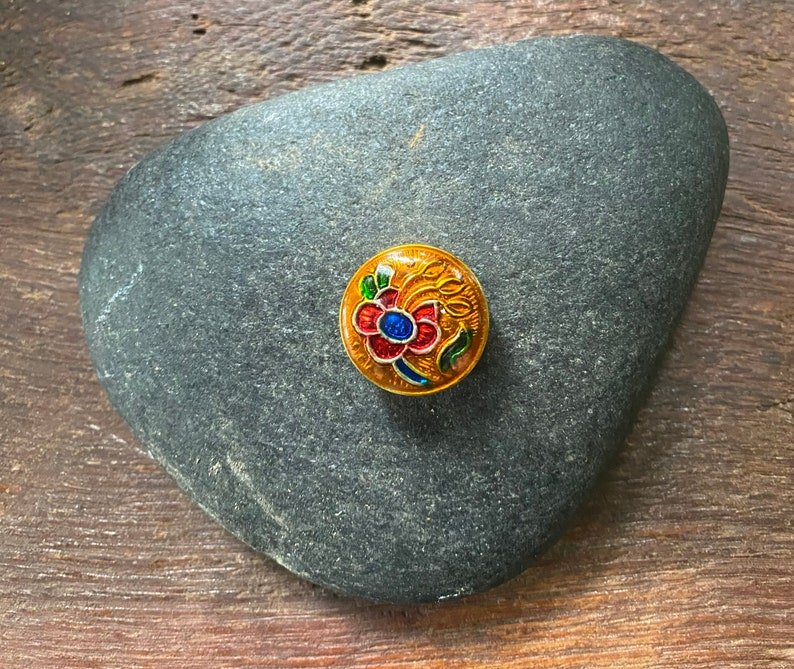
Lightly scented solid perfume made from pure essential oils, beeswax, and woods + resin infused oil blends, in lovely tiny, sample brass containers featuring press-on lids.
The same solid perfume is also available in rosewood and carved soapstone containers with screw on lids and a gorgeous smooth soapstone container that does NOT have a screw on lid.
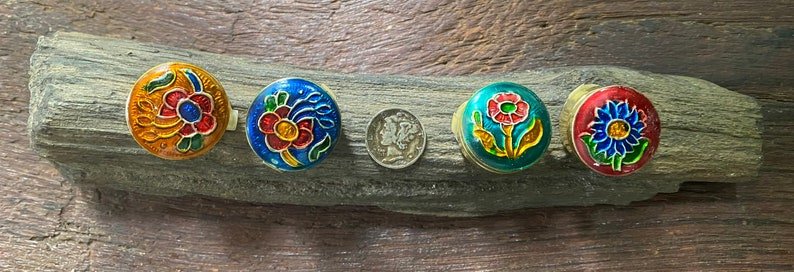
Each of the tiny brass box contains 4 grams of demure solid perfume. a generous sample.
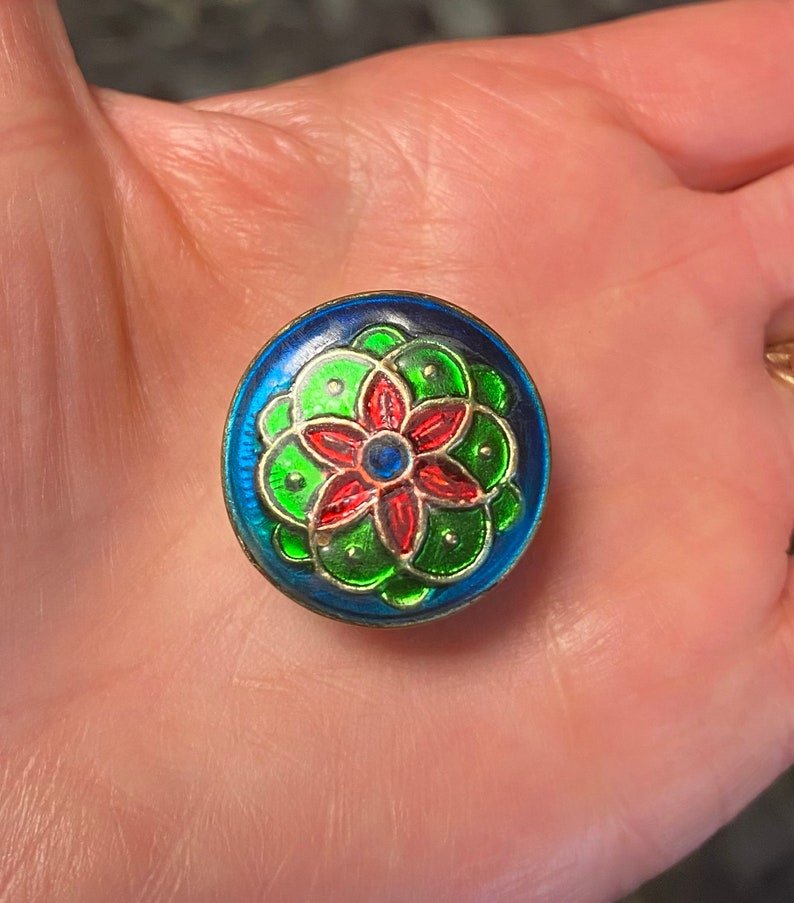
Each measures 25-1/3 mm round.
The color will depend on ingredients used and may not be uniform.
Choose your scent from from the drop down menu.
Moisturizing the skin with an unscented oil or lotion prior to use will help your fragrance last longer.
SANDALWOOD
Experience SANDALWOOD, which is a class of woods from trees in the genus Santalum and has thousands of years of usage history.
It is one of the most sought after fragrant materials known to us and the supply of it can never meet the demand.
The woods are heavy, yellow, and fine-grained, and unlike many other aromatic woods, they retain their fragrance for decades.
Sandalwood oil is extracted from the wood from trees that are a minimum of 15 years old.
Indian Sandalwood is very sacred in the Hindu Ayurveda and is known in Sanskrit as Chandana.
The wood is used for worshipping the God Shiva, and it is believed that Goddess Lakshmi lives in the sandalwood tree.
The wood of the tree is made into a paste using sandalwood powder and this paste is integral to rituals and ceremonies, to mark religious utensils, to decorate the icons of the deities, and to calm the mind during meditation and prayer.
It is also distributed to devotees, who apply it to their foreheads or the necks and chests.[13] Preparation of the paste is a duty fit only for the pure, so is entrusted in temples and during ceremonies only to priests.
It is very popular in India and is also used in Nepal.
In Hinduism and Ayurveda, sandalwood is thought to bring one closer to the divine, thus, it is one of the most used holy elements in Hindu and Vedic societies.
In Jainism, Sandalwood use is integral part of daily practices.
Sandalwood paste mixed with saffron is used to worship Jain deities.
Sandalwood powder is showered as blessings by Jain monks and nuns (sadhus and sadhvis) to their disciples and followers.
Sandalwood garlands are used to dress the body during Jain cremation ceremonies.
In some Buddhist traditions, sandalwood is considered to be of the padma (lotus) group and attributed to Amitabha Buddha.
Sandalwood scent is believed by some to transform one’s desires and maintain a person’s alertness while in meditation.
It is also one of the most popular scents used when offering incense to the Buddha and the guru.
Sandalwood, along with agarwood, is the most commonly used incense material by the Chinese and Japanese in worship and various ceremonies.
Zoroastrians offer sandalwood twigs to the urn in which the fire is kept at the fire temple (called agiyari in Gujarati and dar-e mehr in Persian), to keep the fire burning during religious ceremonies.
After the fire keeping priests complete the ceremony, attendees are allowed to come up to the afarganyu and place their own pieces of sandalwood into the fire.
Fire has been a sacred symbol in the Zoroastrian religion since ancient times and it is considered very important to keep the fires in the temples constantly burning.
Because of its high sensitivity to fire, sandalwood works very well for this.
Sandalwood is called Sukhad in the Zoroastrian community.
Use with reverence!
It is used in incense, soap, perfume oil, essential oils, candles and personal toiletries, and is common in ashrams.


Reviews
There are no reviews yet.